

Frequently Asked Questions
-
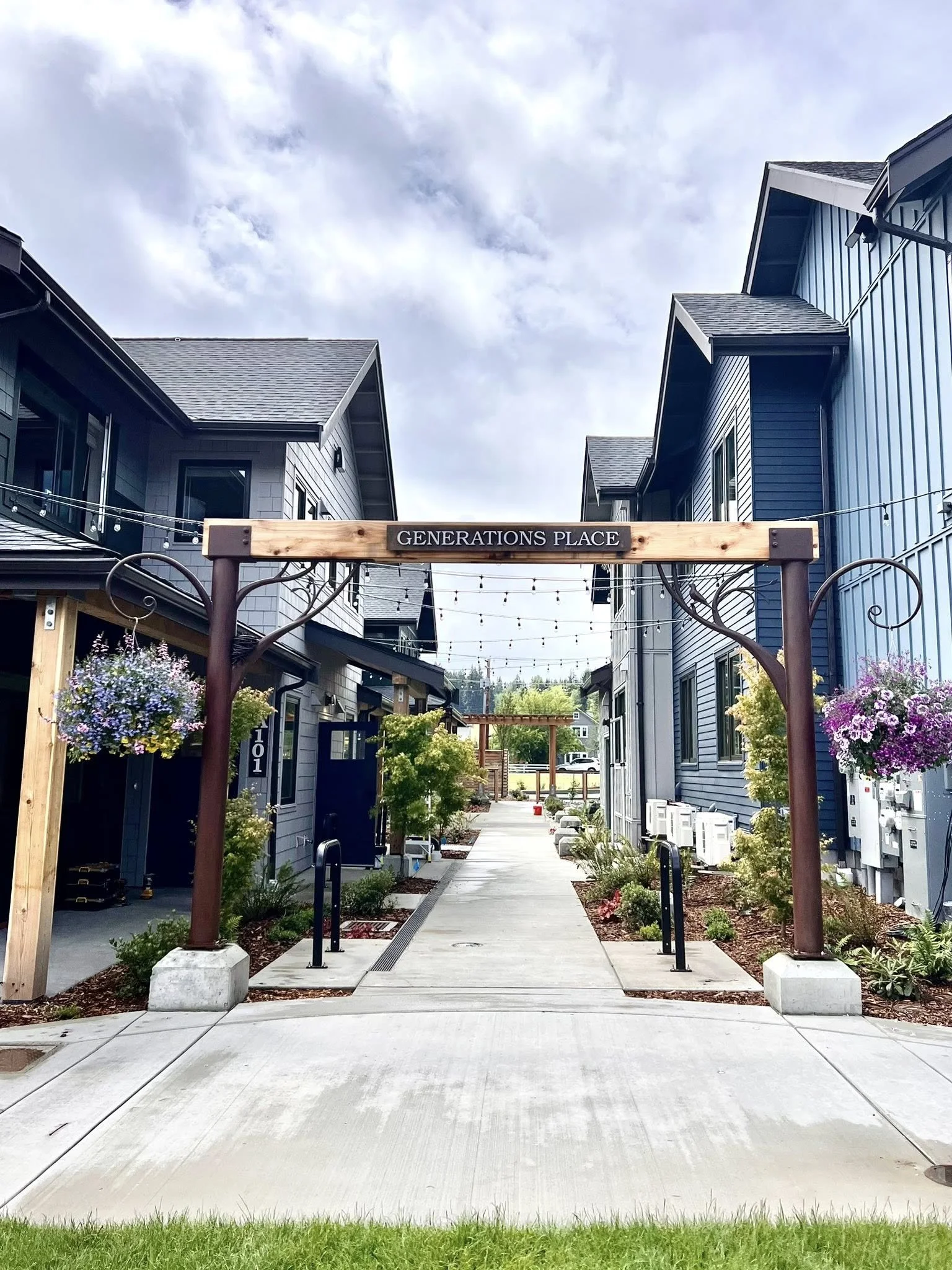
Generations Place is an affordable housing development located in Langley on Whidbey Island. The community provides high-quality, affordable rental housing for income-qualified households and helps meet local needs for stable, long-term housing.
-
Generations Place includes a mix of thoughtfully designed units to accommodate different household sizes:
9 units: 2-bed/1 bath (square footage 762-862). Minimum occupancy 2 persons.
4 units: 3-bed/1.5 bath (square footage 905-952). Minimum occupancy 3 persons.
1 unit: 3-bed/1 bath (square footage 935). Minimum occupancy 3 persons.
Each home is designed to be light-filled and spacious, with efficient layouts that support comfortable everyday living. -
Generations Place was designed with sustainability, comfort, and community in mind. Features include:
A centralized domestic hot water system serving all units
Energy Recovery Ventilation (ERV) systems in each home to balance humidity, temperature, and fresh air exchange for a healthy indoor climate
Solar arrays that help offset electrical loads for the domestic hot water system, EV chargers, and the shared laundry room
Shared laundry facilities onsite
Onsite parking
EV charging stations onsite
An open courtyard designed for gathering and play
A city park located directly across the street
Pet friendly property
Dedicated bike rack for each unit
Walking distance to downtown Langley, including shops, services, and community amenities
These features help promote energy efficiency, environmental responsibility, and a strong sense of community connection.
-
All utilities are included except electricity and internet, which are the responsibility of the resident. The centralized systems and solar infrastructure help improve overall energy efficiency and reduce operating costs.
-
Generations Place is federally and state supported affordable housing for moderately low-income households with minor children in Island County. Eligibility is based on combined household income—specifically, five units are designated for households with no more than 60% Area Median Income (AMI) for our region, and nine units are limited to households with no more than 80% AMI.
60% of the Area Median Income (AMI) — for a portion of the units, ensuring deeply affordable rents for those with the greatest need, and
80% of AMI — for additional units to accommodate a broader range of working households and families.
Click here to view the current AMI income table.
Income limits are based on Island County guidelines and vary by household size. Eligibility is verified during the application process.
-
Area Median Income (AMI) is the middle household income in a specific geographic area (like a city or county). If you line up all households by income from lowest to highest, the median is the one in the middle, meaning half earn more and half earn less. 2026 AMI for Island County is $112,300.
Click here to view the current AMI table. -
Eligibility is determined using the most recent AMI figures for Island County, adjusted for household size. For example, a family of four must have a total household income at or below the specified limit (60% or 80% of AMI, depending on the unit) to qualify. Household income and assets are verified during the application process.
-
Prospective residents must submit an application and provide documentation verifying income, employment, and household size. If all units are occupied, qualified applicants are placed on a waiting list.
Application materials and updates are available through the property management team.
-
Property management is overseen by Ad-West Realty Services in partnership with Island Roots Housing. Together, they ensure professional management, regulatory compliance, and long-term stewardship of the property.
-
Affordable housing means residents pay no more than approximately 30% of their gross monthly income toward rent and basic utilities, helping households maintain stability and meet other essential needs.
-
Rent at Generations Place is affordable in perpetuity. Our guiding principle is to create housing that remains affordable not just for a few years or a funding cycle, but permanently. We are committed to ensuring that homes developed for the people of Island County stay affordable for generations to come.
-
The development is designed to blend with the surrounding community and contribute positively by increasing housing stability for local residents. Its proximity to parks and downtown amenities supports walkability and neighborhood vitality.
-
Affordable housing developments are typically financed through a combination of community donations/philanthropy, public and private funding sources, which may include federal and state housing tax credits, grants, local government contributions, and private investment. These layered funding sources help keep rents affordable over the long term.